
Introduction
UPVC windows have become one of the most popular choices for modern homes and commercial spaces because of their durability, energy efficiency, and stylish appearance. Among the various types available, sliding and casement UPVC windows are the most commonly preferred options. Each style offers unique advantages depending on your space, ventilation needs, and design preferences.
If you are planning to install UPVC windows for your property, understanding the differences between sliding and casement windows can help you make the right decision.
What Are Sliding UPVC Windows?
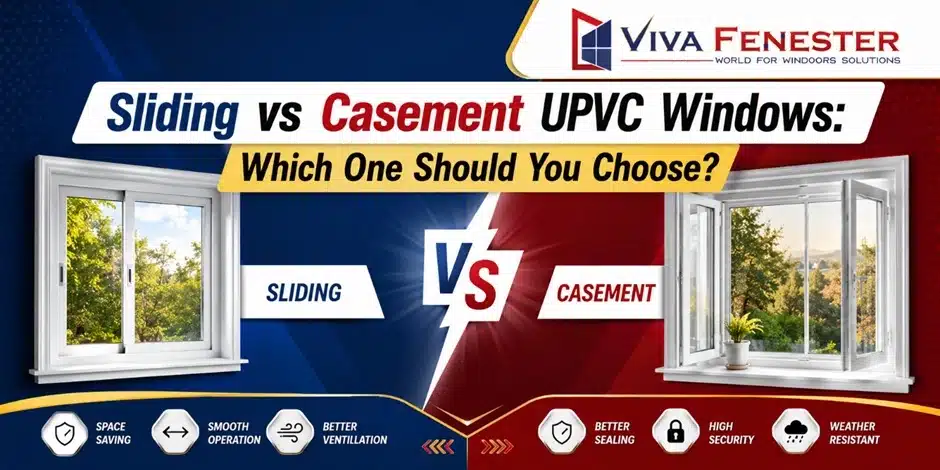
Sliding UPVC windows operate horizontally along tracks. The window panels slide smoothly from one side to another, making them an ideal choice for compact spaces where outward opening windows may not be practical.
Sliding windows are widely used in apartments, balconies, offices, and modern homes because they provide a sleek appearance and easy functionality.
Benefits of Sliding UPVC Windows
Monsoon rains can damage ordinary windows if they are not properly sealed or weather-resistant. uPVC windows are specially designed to resist water leakage, moisture damage, and corrosion. Their airtight sealing systems prevent rainwater from entering the interiors, making them ideal for Indian weather conditions.
- Space-saving designa
- Smooth and easy operation
- Modern and elegant appearance
- Low maintenance requirements
- Excellent natural light flow
- Ideal for balconies and compact areas
Sliding windows are also a perfect option for homeowners looking for stylish and functional Upvc Sliding Doors in Bangalore for modern residential and commercial interiors. Their contemporary design enhances both aesthetics and convenience.
What Are Casement UPVC Windows?
Casement UPVC windows are attached to hinges and open either inward or outward like a door. These windows are known for providing excellent ventilation and a tight seal against dust, noise, and weather conditions.
Casement windows are commonly used in bedrooms, kitchens, living rooms, and villas because they offer better airflow and energy efficiency.
Benefits of Casement UPVC Windows
- Better ventilation and airflow
- Strong sealing for insulation
- Improved energy efficiency
- Enhanced security features
- Easy cleaning and maintenance
- Suitable for larger openings
Many homeowners prefer Casement Upvc Windows in Bangalore because they provide superior ventilation and work well in areas that require maximum air circulation and weather protection.
Key Differences Between Sliding and Casement UPVC Windows
Ventilation
Casement windows generally offer better ventilation because the entire window can open outward or inward. Sliding windows provide moderate airflow as only one side opens at a time.
Space Requirements
Sliding windows are ideal for smaller spaces because they do not require extra room for opening. Casement windows need clearance space for the shutters to swing open.
Energy Efficiency
Casement windows provide a tighter seal when closed, making them slightly more energy-efficient than sliding windows.
Maintenance
Both window types are low maintenance, but sliding windows may require regular track cleaning to ensure smooth movement.
Aesthetic Appeal
Sliding windows provide a modern and minimalist appearance, while casement windows offer a more classic and elegant look.
Which One Should You Choose?
The choice between sliding and casement UPVC windows depends on your property type, ventilation requirements, available space, and design preferences.
Choose sliding UPVC windows if:
- You have limited space
- You prefer modern designs
- You need windows for balconies or apartments
Choose casement UPVC windows if:
- You want maximum ventilation
- You need better insulation
- You prefer traditional window functionality
Conclusion:
Both casement and sliding UPVC windows offer excellent durability, energy efficiency, and aesthetic appeal for residential and commercial properties. Sliding windows are ideal for compact modern spaces, while casement windows provide better ventilation and insulation.
By understanding the advantages of each style, homeowners can select the best UPVC window solution that matches their comfort, functionality, and design needs.